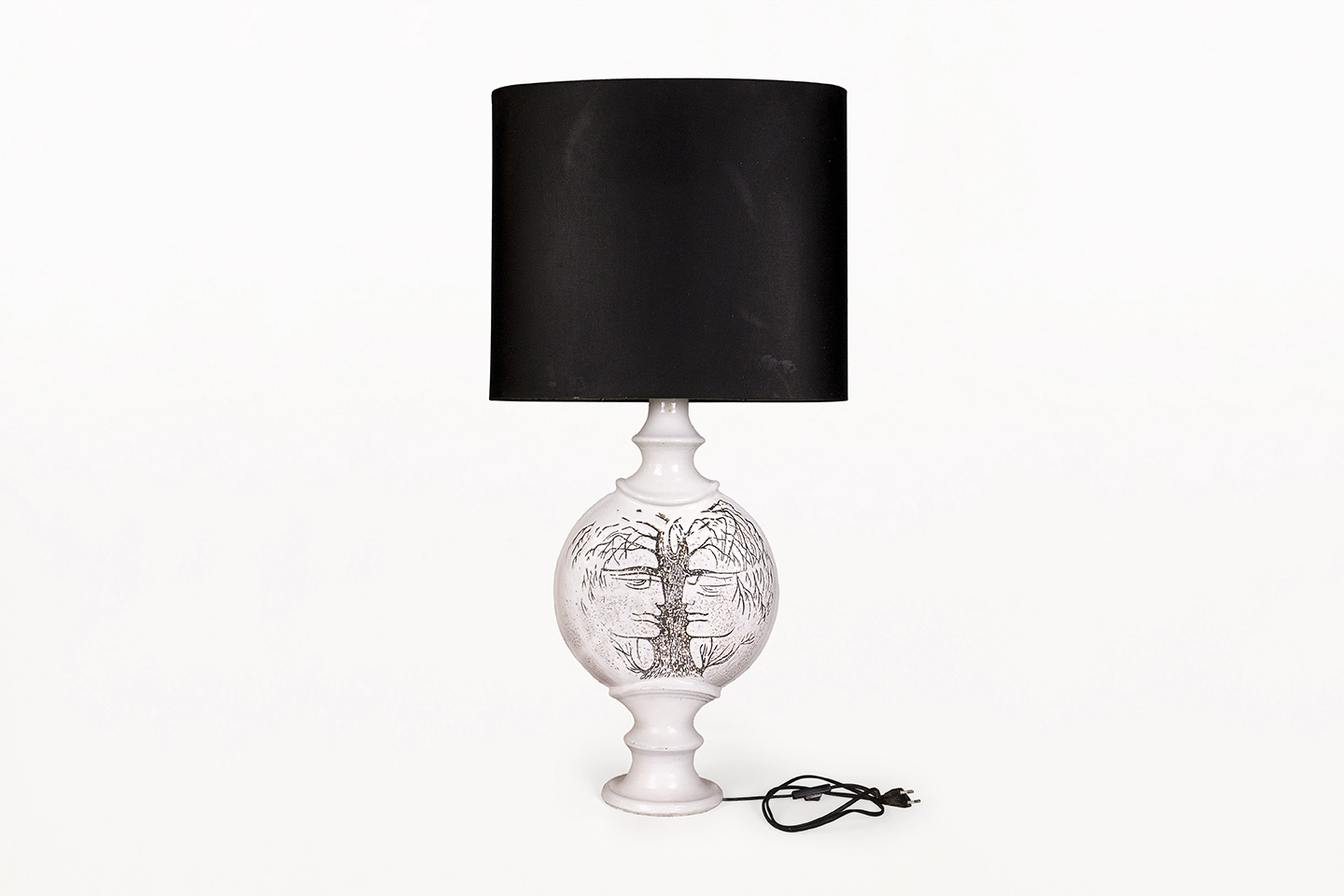
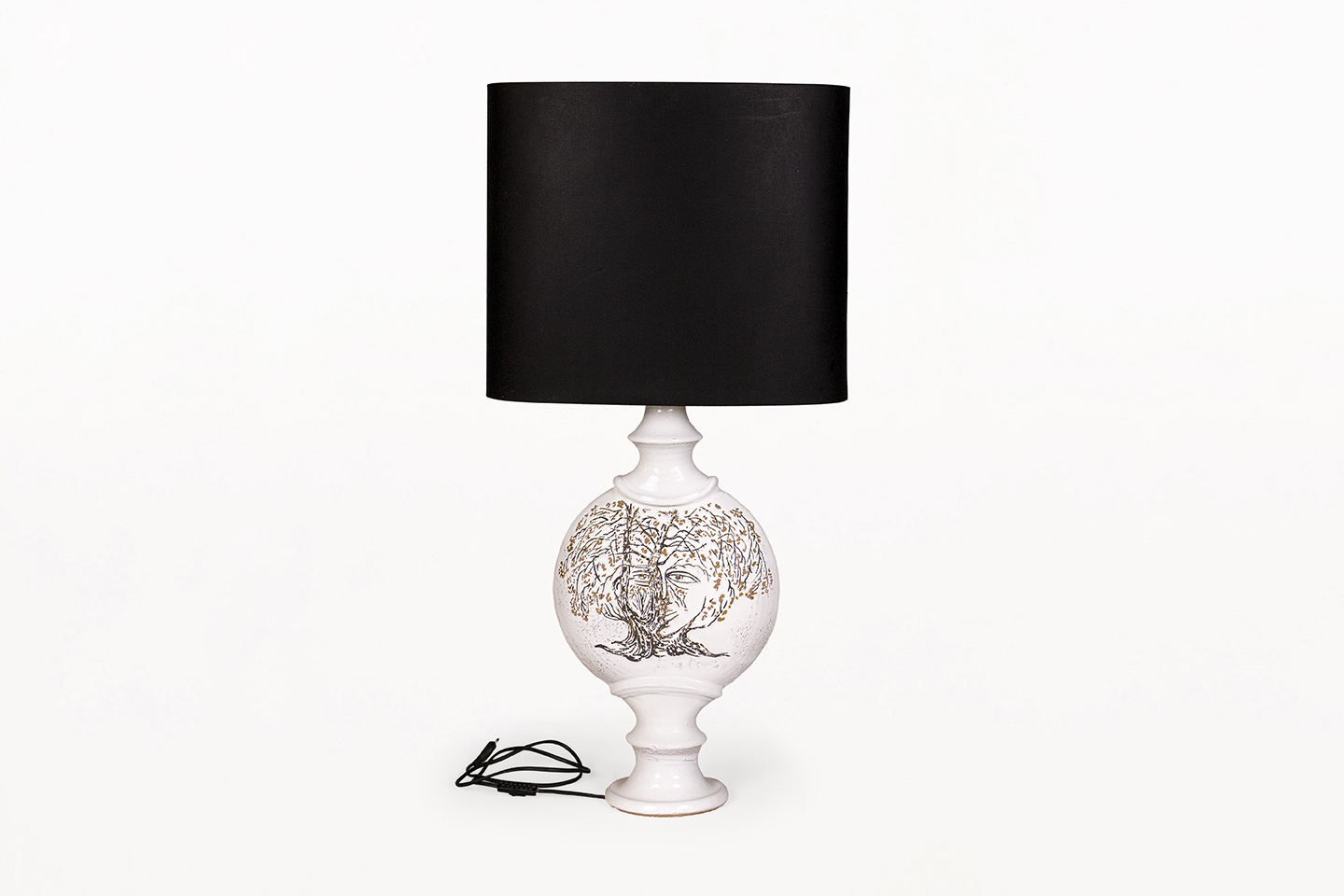
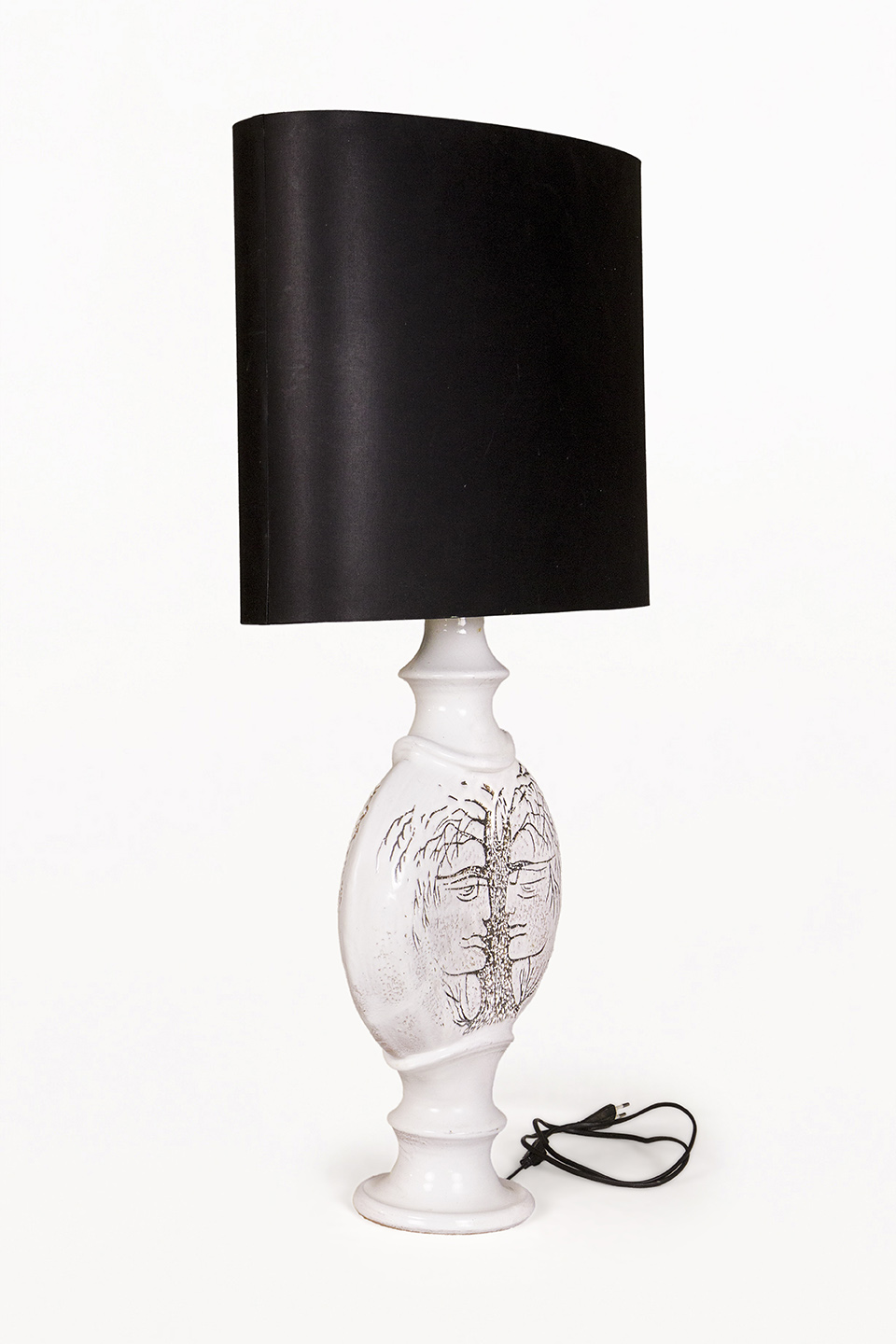
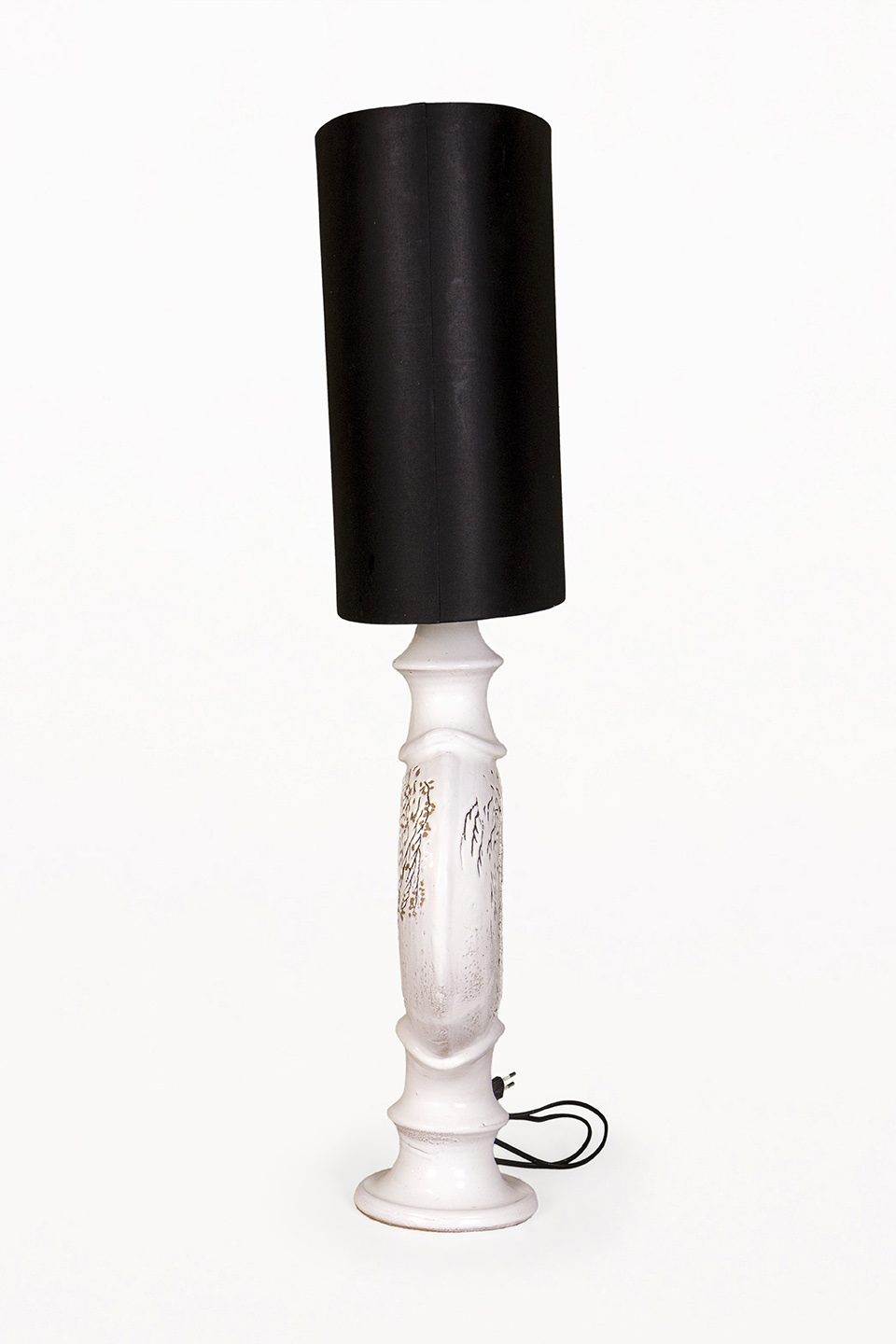
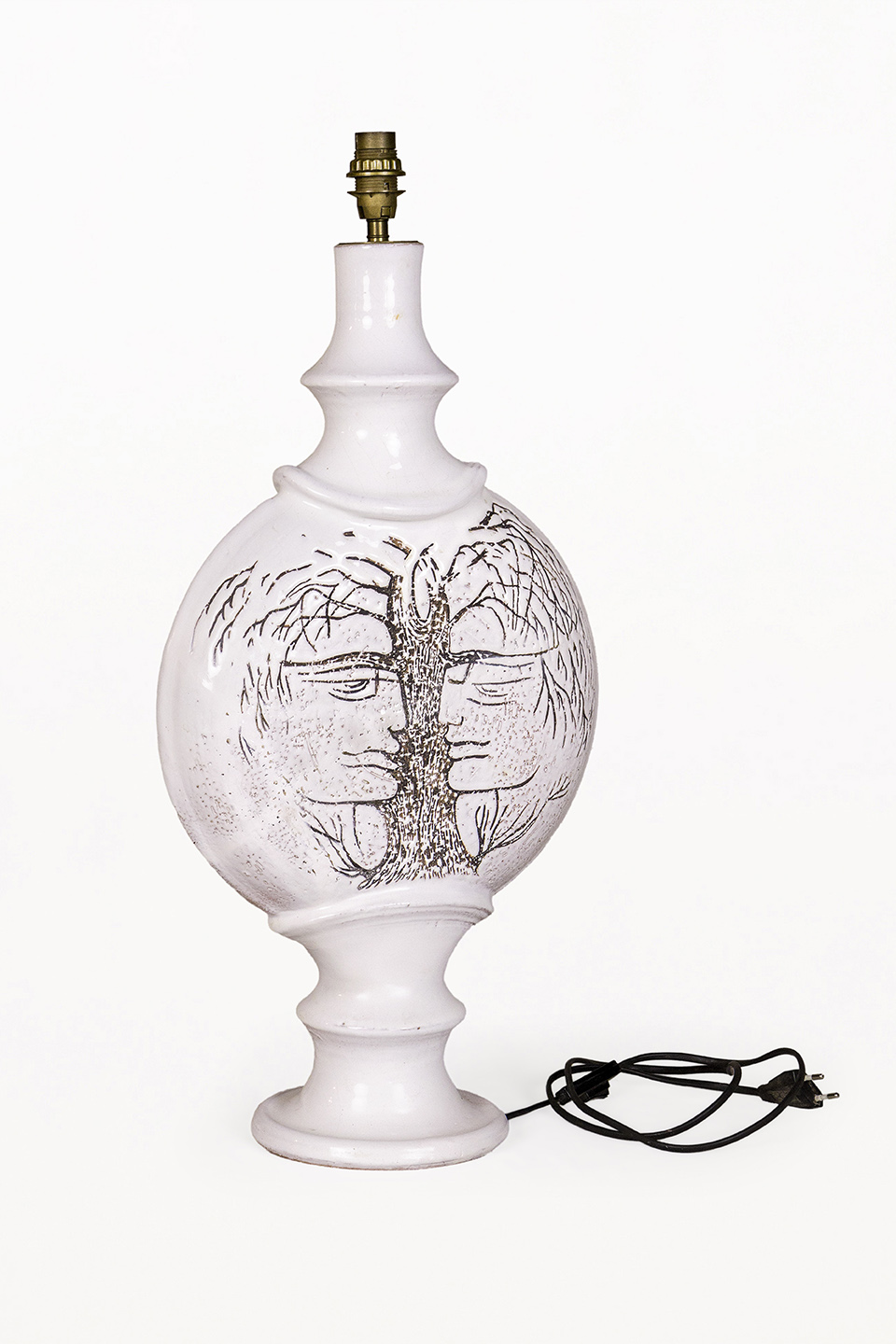
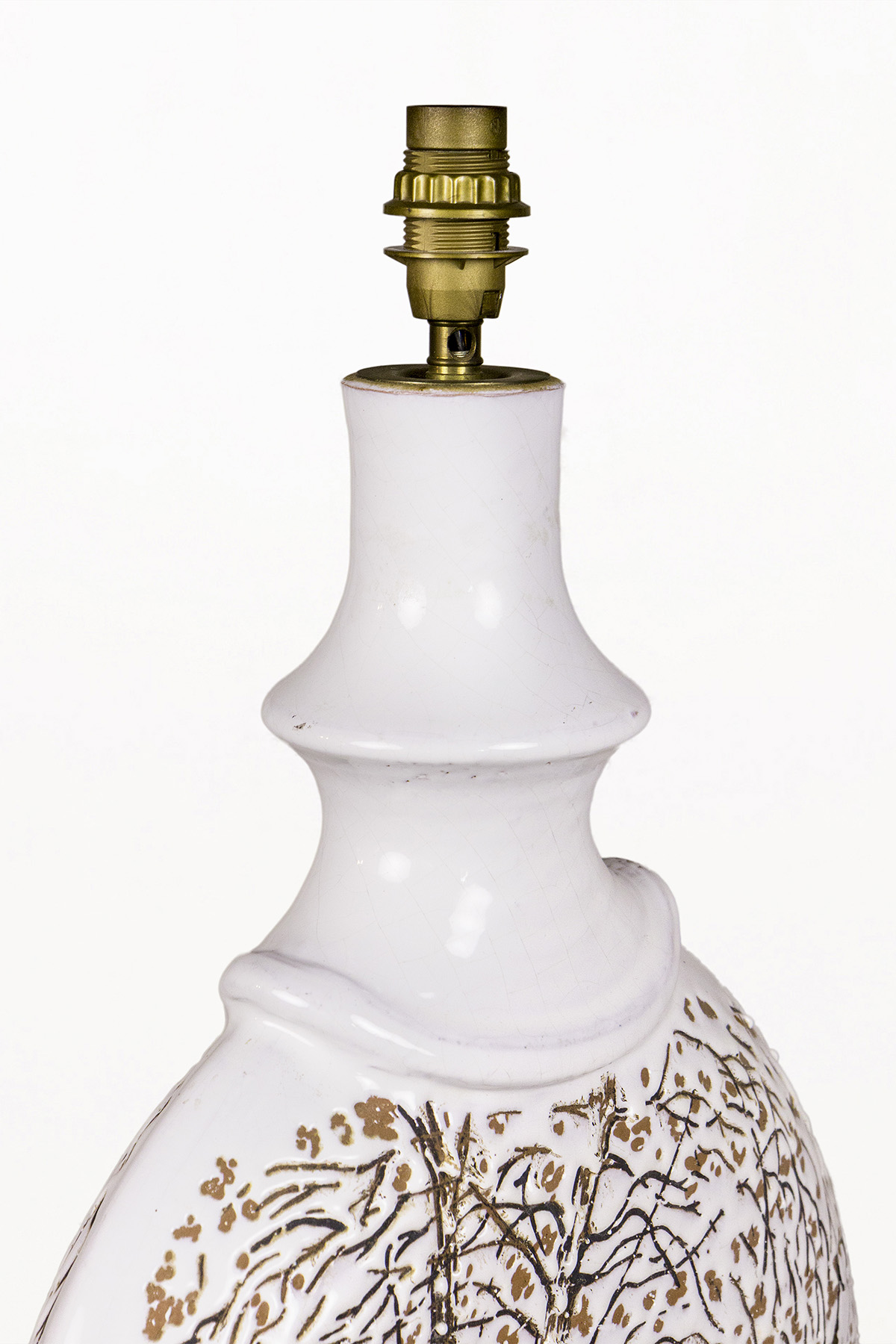
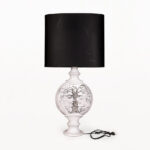
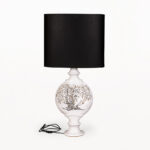
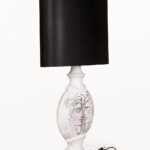
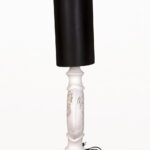
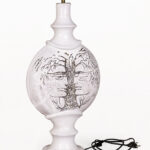
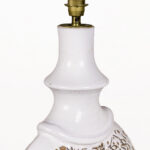
Large Ceramic Table Lamp by Jean Marais, Circa 1950, France
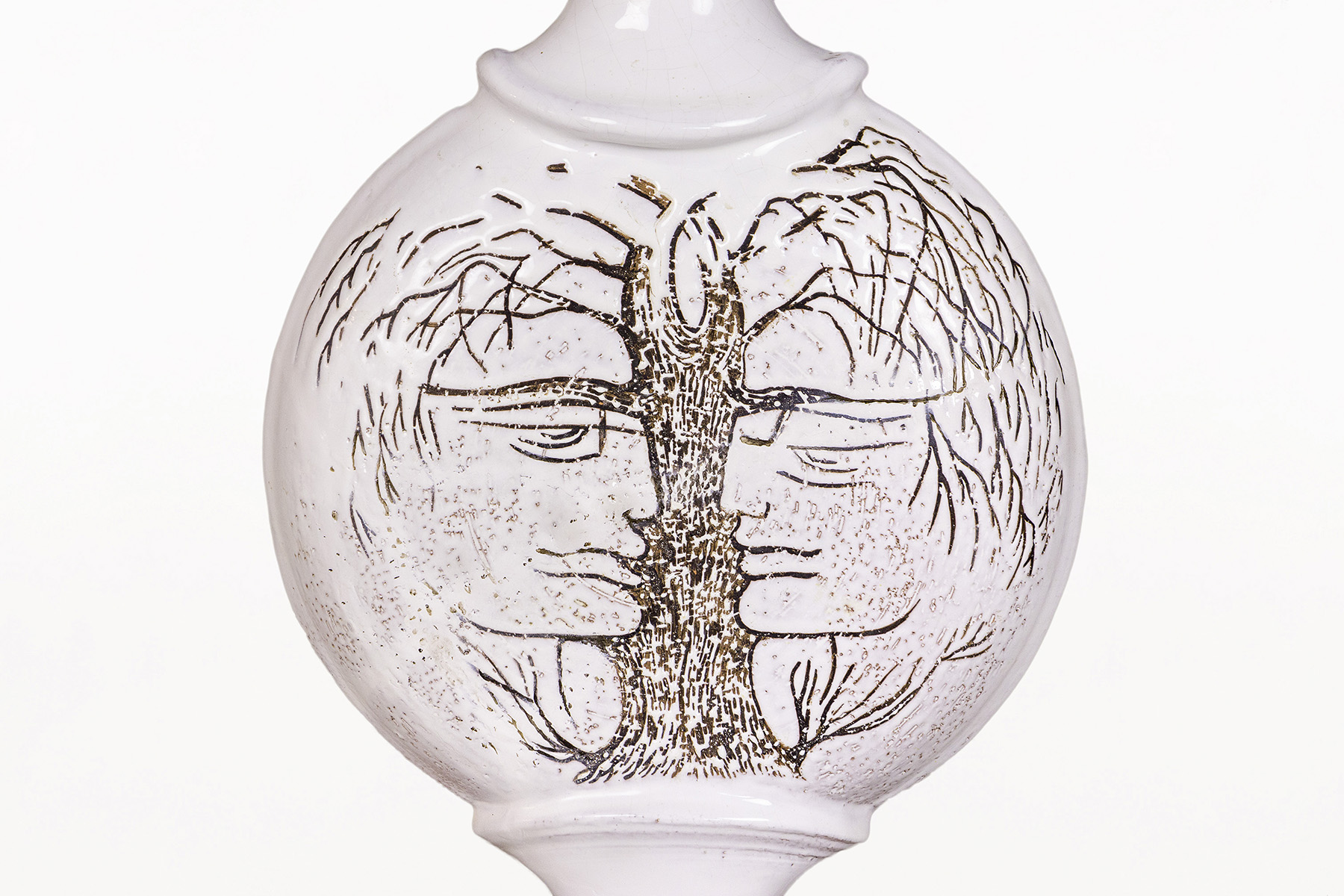
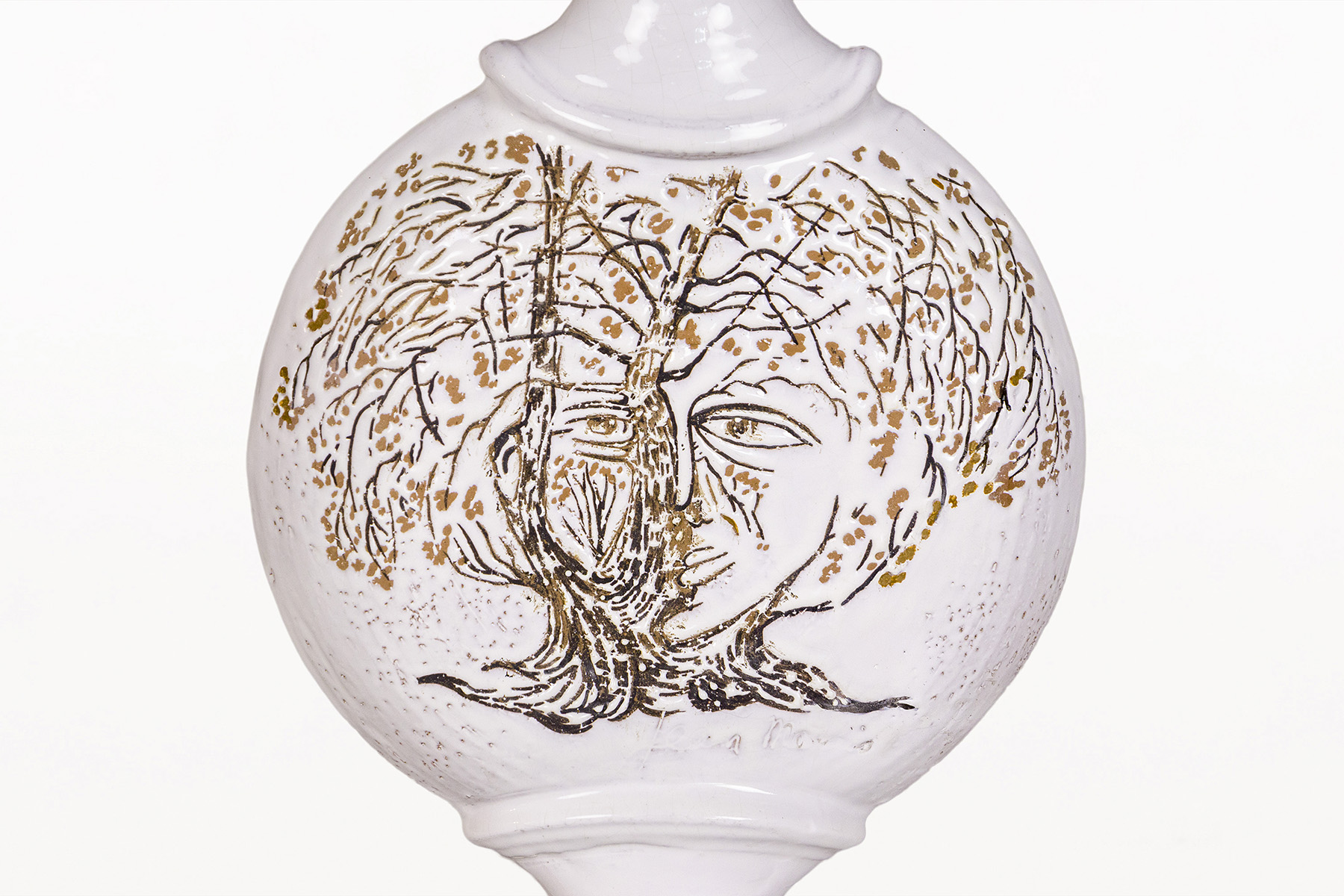
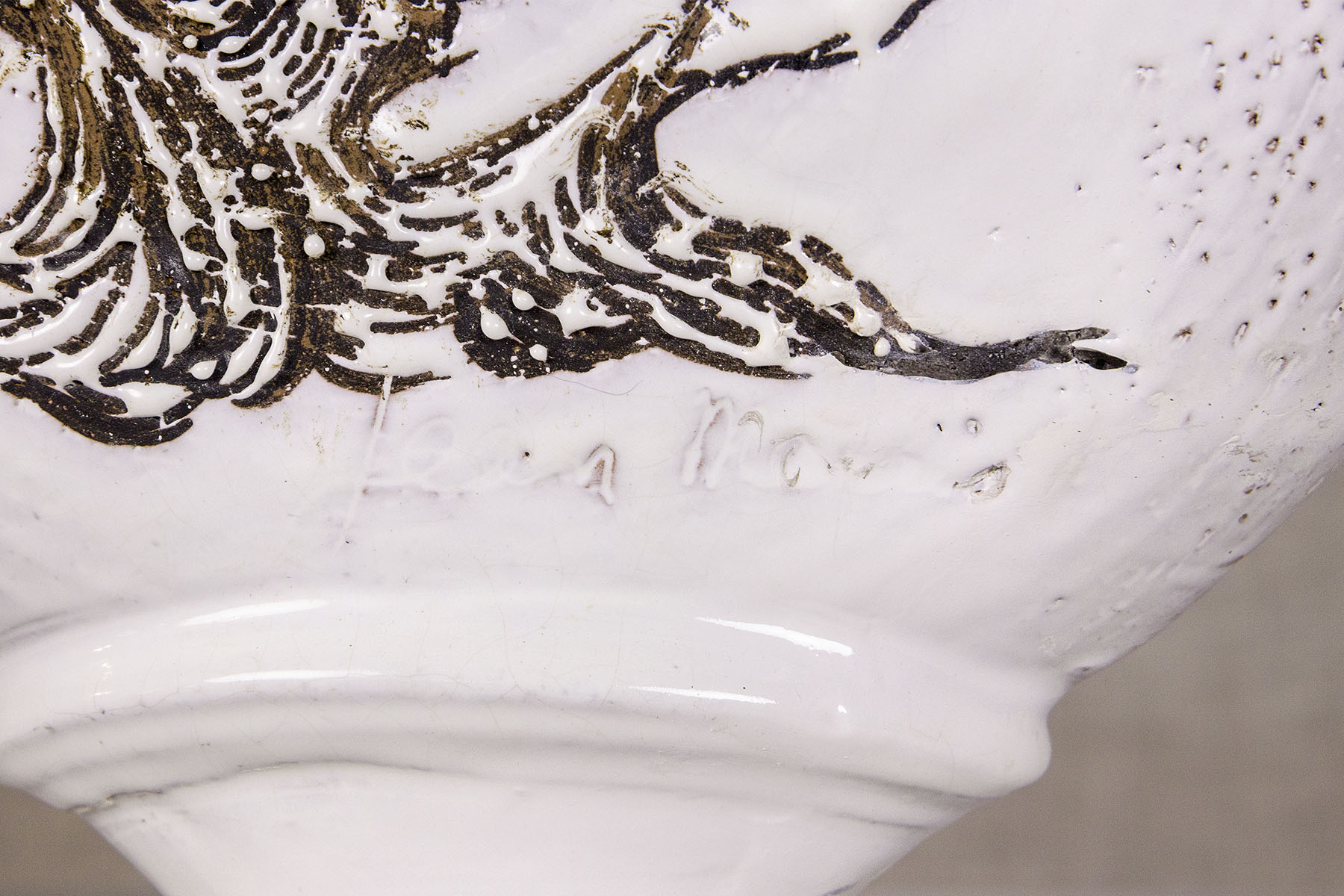
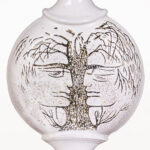
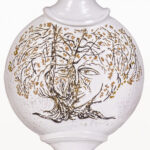
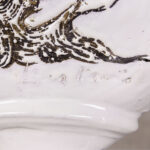
DESCRIPTION: Large Ceramic Table Lamp by Jean Marais, Circa 1950, France. Entitled: “Spirit of the Forest”. Recto: Two facing faces around a tree. Verso: Autoportrait masked by a tree, signed
CONDITION: Good condition. Wear consistent with age and use.
DIMENSIONS: Height: 97cm (38in) Width: 49cm (19in) Depth: 22cm (9in) DIMENSIONS with LAMPSHADE: Height: 65cm (26in) Width: 32cm (13in) Depth: 16cm (6in)
REFERENCE: LA_0122
ABOUT THE DESIGNER: Jean Marais (1913–1998) was a legendary French actor, sculptor, and polymath who became one of the most iconic faces of 20th-century European cinema.His life and career were deeply intertwined with the visionary artist Jean Cocteau. They were partners in both life and art, a relationship that produced some of the most poetic films in history. Marais served as Cocteau’s ultimate muse, starring in masterpieces like: Beauty and the Beast (1946): His dual role as the Prince and the Beast (under five hours of daily makeup) remains his most famous performance.Marais was not just an actor; he was a prolific creator, creating art and pottery.Later in life, he moved to Vallauris (the same village where Picasso worked) to focus on pottery, painting, and sculpture. Marais was remarkably open about his homosexuality at a time when few actors were. He spent his final years preserving Cocteau’s legacy and continued to act until the very end, including a role in Bernardo Bertolucci’s Stealing Beauty (1996). He is buried in Cannes.
ABOUT THE STYLE: Jean Marais’ art style is best described as poetic, figurative, and multidisciplinary. While he was a world-famous actor, his visual art was a serious lifelong pursuit, deeply shaped by his proximity to Jean Cocteau and the artisan culture of Vallauris. His paintings and drawings often feature stylized, idealized human faces and figures. There is a “dreamy” quality to his work that mirrors the Surrealist and Romantic atmosphere of his films, like Beauty and the Beast. After moving to Vallauris in the 1970s, he became a master potter. His ceramics are known for being anthropomorphic (giving human traits to objects) and zoomorphic, often featuring animals like pelicans, lions, or mythical creatures.
Related products
-
Pair of Table Lamps, circa 2000, France
-
Pair of Table Lamps by Angelo Brotto 1980, Italy (LA0035)
-
Angelo Brotto Table Lamp, circa 1970, Italy (LA0019)
-
Pair of Serge Castella Ceramic Table Lamps for Paco Ponte, 2019, France (LA0090)